

Physiotherapy and recovery · La Nucía
When pain subsides,
it does not mean
you are ready.
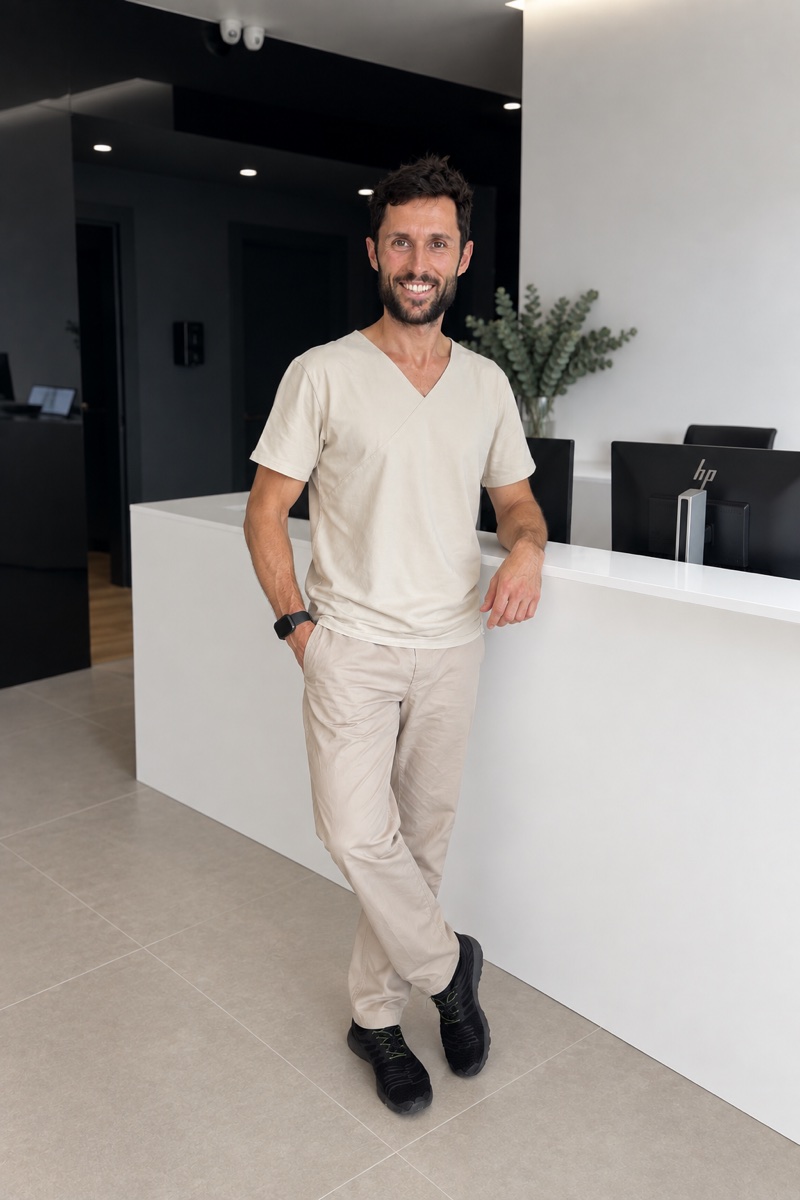
Recovery is not about waiting for things to pass. It means understanding what limits your movement, rebuilding capacity and checking that you can return to daily life, work or sport through the right progression.
01 — When it may help
You do not need to compete
to need a proper return.
The assessment adapts to each person’s starting point and goal: from regaining everyday activities to returning to training or competition.
- 01
Recent pain or injury
When a problem limits movement, work, rest or an activity that matters in your life.
- 02
Post-operative recovery
To progress from the initial medical guidance towards the mobility, strength and function you need to regain.
- 03
Recurring problems
When pain settles, then returns as you increase pace, load or frequency of activity.
- 04
Return to exercise
If you want to resume an active life after injury, inactivity or a loss of confidence.
- 05
Return to sport
For recreational, competitive or elite athletes who need to rebuild load tolerance and sport-specific demands.
02 — The process
From symptoms
to capacity.
The pathway is not decided in advance. The functional assessment establishes your starting point and allows each phase to adapt as you progress.
- 01
Understand
Listen to what happened, what is limiting you now and which activity you need to return to.
- 02
Assess
Observe movement, function and your response to the demands that matter in your case.
- 03
Recover
Work on mobility, control and the symptoms that make progress difficult.
- 04
Build
Introduce strength and progressive loading to rebuild tolerance and physical capacity.
- 05
Check
Review your response against functional criteria before increasing demands.
- 06
Return
Plan a gradual return to everyday life, work or sport.
03 — Clinical resources
Technique serves the plan.
Not the other way around.
Samuel selects the resources that may add value after assessing each case. No technique replaces progressive recovery work.
- 01
Advanced physiotherapy and osteopathy
A manual and functional approach adapted to the stage of recovery and the person’s goal.
- 02
Musculoskeletal ultrasound
It may be used when it adds relevant information to the assessment or tissue follow-up.
- 03
Functional neuromodulation
A tool that may be included in treatment when professionally indicated.
- 04
Fascial therapy
Techniques designed to support movement within a broader functional recovery plan.
- 05
MAGNETOLITH® · EMTT
Non-invasive extracorporeal magnetotransduction therapy that may complement care for certain musculoskeletal problems.
- 06
Exercise and progressive loading
The active part of the process for rebuilding strength, tolerance, confidence and specific capacity.
The choice of techniques, how they are combined and how often they are used depends on the professional assessment, existing medical guidance and each person’s progress.
04 — A complete recovery
When the cause goes beyond
physiotherapy, the team joins in.
Your physiotherapist sets your recovery plan. If the cause of the problem is not only musculoskeletal, the ETRYUM areas your case needs — such as integrative medicine or psychoneuroimmunology, as well as orthopaedics and sports medicine — join in to complete the treatment and resolve the cause of the problem.
Each area comes in at the moment it is needed.
05 — Your specialist
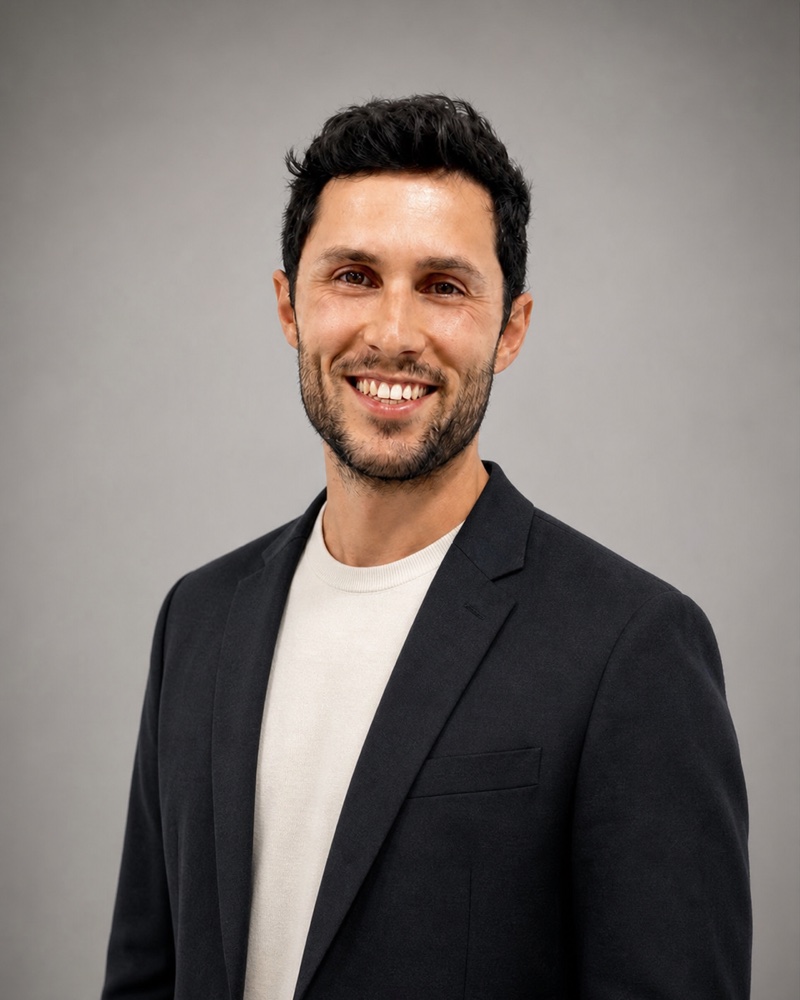
Samuel Rubio
Advanced physiotherapy · Advanced osteopathy
Recovery and return to activity
A registered physiotherapist (ICOFCV, no. 5707) with more than 15 years of experience in private practice and with elite athletes in rugby, football —including the Spanish First Division— and tennis. He specialises in musculoskeletal ultrasound, functional neuromodulation and fascial therapy.
View full profileDo you offer physiotherapy in La Nucía?
Yes. Samuel Rubio, physiotherapist and osteopath, sees patients at ETRYUM, in Ciudad Deportiva Camilo Cano, La Nucía. Physiotherapy is part of a recovery plan that starts with a functional assessment and, when needed, is coordinated with medicine, orthopaedics or PNI.
Is this assessment only for athletes?
No. It is for people with pain or limitations in daily life, post-operative recoveries, people who want to return to exercise and athletes at any level.
What happens during the functional assessment?
Samuel reviews the reason for your visit, relevant history, current limitations and the goal you want to return to. He then assesses movement and function before proposing the next steps, where appropriate.
Can I come after surgery?
Yes, while respecting the guidance and timescales set by your medical team. Bring any reports and instructions you have so they can inform the assessment.
Is MAGNETOLITH® used in every case?
No. It is a complementary resource and is proposed only when Samuel considers it may be appropriate within the recovery plan.
Can recovery be coordinated with PNI or medicine?
Yes. When the problem cannot be resolved through physiotherapy alone, integrative medicine, PNI or other areas join in at the moment they are needed.
Can I send medical reports through this form?
No. The form is only for requesting contact and arranging the assessment. Clinical documents are collected later through the appropriate channels.
07 — Functional assessment
Start by knowing
where you are now.
Leave your details to request a functional assessment with Samuel Rubio. The team will contact you personally to guide you and arrange the appointment.
Prefer to speak directly? +34 621 172 479 · info@etryum.com
Thank you.
We have received your request.

ETRYUM reception · Patient careOur reception team will write to you personally within 24 hours (working days).