

How we work

Health does not work
in departments.
Neither does ETRYUM.

Integration is not adding services together: it is connecting assessment, context, clinical judgement and follow-up around one person.

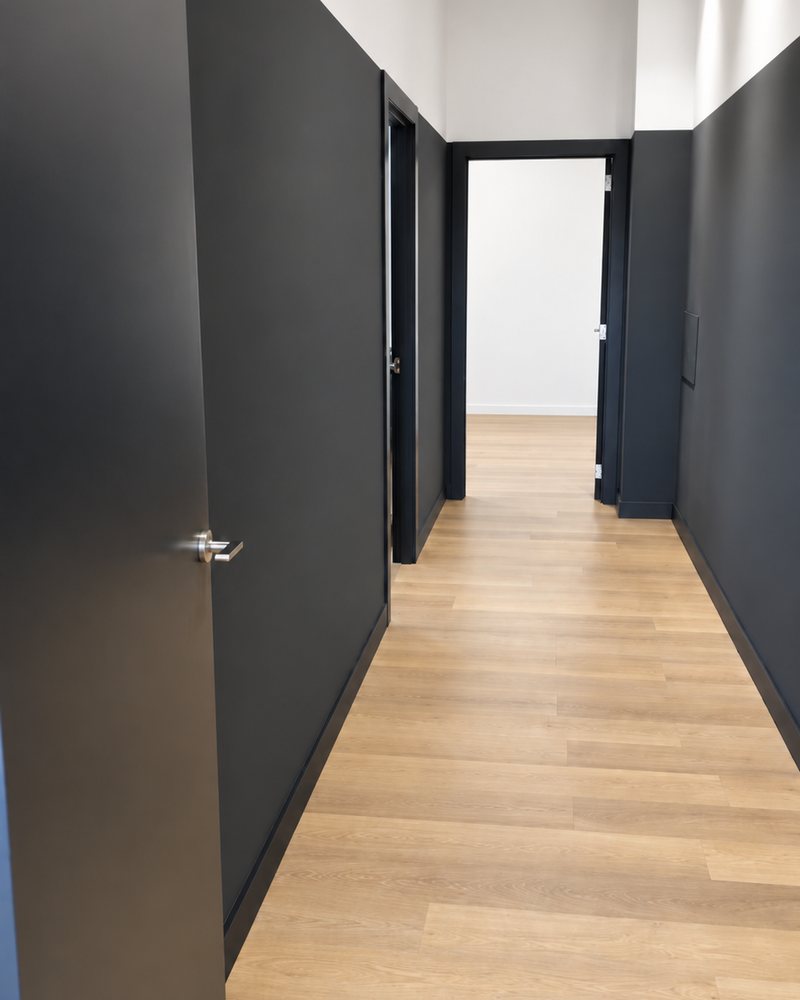
A consultation corridor at ETRYUM, with dark walls and a wooden floor.

01 — The method

Six steps,
one direction.

Every case is different, but the pathway always follows the same logic: understand first, decide next, and keep reviewing.

  1. 01

    Listen

    Your history, your context, your goals and what you have already tried. The person before the protocol.

    Starting point
  2. 02

    Assess

    A clinical and functional assessment with the right professional, supported by the data that is relevant to your case.

    60 min
  3. 03

    Coordinate

    When a case requires it, the clinicians involved share findings and judgement before proposing a strategy.

    When needed
  4. 04

    Plan

    An individual plan with clear priorities and short, medium and long-term objectives.

    Personalised
  5. 05

    Accompany

    Close follow-up while the plan is put into practice, with a team that knows your case.

    Ongoing
  6. 06

    Review

    Progress is reviewed and the plan is adjusted as you change.

    Periodic

02 — What coordination means

Integrating
is not mixing.

  1. 01

    Each discipline, in its own scope

    Each clinician works within their scope of practice and coordinates with, or refers to, the responsible colleague whenever a case requires it.

  2. 02

    One shared reading

    Symptoms, sleep, metabolism, movement, stress and recovery are read together, not separately.

  3. 03

    Data guides, judgement decides

    Technology helps organise information and follow trends. Interpretation and responsibility stay with the clinical team.

When a case calls for it, two or more clinicians can assess the same person together and give one coordinated explanation.

03 — What it looks like in practice

Three starting points.
One team around each.

Only the disciplines each case needs are involved. What never changes is that they all work on the same plan.

Prevention

47. Sleeping badly, recovering more slowly.

Still training, but no longer performing as before. Energy comes and goes, and the latest blood test raised questions.

  1. Integrative and longevity medicineMedical history, ECG, body composition and a review of the blood test.
  2. PNISleep, stress and habits: what is holding recovery back.
  3. Recovery and performanceBaseline strength and physical capacity.

OutcomeOne plan with clear priorities, instead of three separate opinions.

Injury

Torn ligament. Wants to play again.

Injured a knee playing football and needs to know what to do and when a return is realistic.

  1. Orthopaedics and sports medicineDiagnosis and the treatment decision.
  2. Advanced physiotherapyPhased rehabilitation, coordinated with the surgeon.
  3. Recovery and performanceObjective criteria for returning to sport.

OutcomeThe same team, from diagnosis back to the pitch.

Longevity

52. Feels fine. Father had a heart attack.

No symptoms, but wants to know where things stand and what to do now.

  1. Longevity medicineCardiovascular and metabolic risk, ECG and body composition.
  2. Recovery and performancePhysical capacity and exercise tolerance.
  3. Follow-upReviews to check the plan is working.

OutcomeA baseline and a realistic prevention plan, reviewed over time.

Illustrative examples, not real cases. Every pathway depends on each person's clinical assessment.

04 — Connected areas

Five perspectives
around one person.

Each area brings its own view; the value lies in all of them sharing one direction.

  • Psychoneuroimmunology · PNI

    A systemic clinical perspective exploring how lifestyle, metabolism, stress, sleep and immune regulation interact within the individual.

  • Integrative medicine

    A broader clinical perspective designed to understand the patient beyond isolated symptoms, and to build a personalised strategy around their health context.

  • Longevity medicine

    Clinical assessment and personalised strategies designed around long-term health, function and resilience. Longevity is the quality of the years ahead.

  • Orthopaedics & sports medicine

    Musculoskeletal assessment and treatment connected directly with rehabilitation and return to activity — from diagnosis to recovery strategy.

  • Recovery & return to activity

    Advanced rehabilitation designed to restore movement, function and physical capacity — not simply to reduce symptoms.

See the areas in detail

First step

Tell us
what you need.

We will help you identify the right next step.