


Imagine someone who has been tired for months.
They sleep badly, have put on weight without any obvious change, their digestion feels sluggish and they have back pain that comes and goes. They have been to several appointments: the blood test comes back “normal”, the gastroenterologist finds nothing relevant, the orthopaedic surgeon prescribes an anti-inflammatory and, in the end, someone tells them it is stress.
Each piece has been examined properly. But nobody has looked at the whole. And the person feels no better.
This situation is far more common than it seems. And it is precisely one of the starting points of integrative medicine.
What integrative medicine is
Integrative medicine is a way of practising medicine that puts the whole person at the centre. It does not stand against conventional medicine. On the contrary: it starts from it and widens the view to include risk factors, lifestyle and the relationships between the body’s different systems.
Because a person is not a collection of independent organs. Sleep shapes hormonal regulation, appetite and recovery. Physical activity affects muscle, metabolism and the brain. Sustained stress can change sleep, digestion and the perception of pain.
Integrative medicine tries to understand how the different pieces fit together.
It rests on four ideas:
The person, not just the symptom
A symptom or an abnormal value is part of a story. We don’t only ask what is happening to you, but also how you got here.
The mechanisms, not just the diagnosis
A diagnosis is essential, but it does not always explain what keeps a problem going. We look for the factors that really matter and where it makes sense to act first.
Measure before intervening
We are not looking to run more tests. We measure what can change a clinical decision, and then check what has changed.
One coordinated plan
Medicine, physiotherapy, exercise, nutrition and nursing work from the same map. Patients should not have to coordinate their own medicine.
What it is not
It is worth saying clearly, because the term is sometimes used loosely.
It is not alternative medicine
It does not replace treatments that work, nor your GP or specialist. If a problem needs medication, a procedure or surgery, it becomes part of the plan. It is not avoided.
It is not a one-size-fits-all protocol
Two people with the same symptom may need very different paths.
It does not promise miracles
We work with the available evidence and explain honestly what we know, what we don’t and what can be expected.
Why this approach matters today
Because much of today’s illness is chronic and multifactorial. Cardiovascular, metabolic, respiratory and oncological diseases are linked to factors that interact over years: genetics, age, physical activity, diet, sleep, tobacco, alcohol, body composition and environment. Prevention cannot be reduced to one blood test a year. We need to understand how things evolve.
Because the body’s systems are connected. Poor sleep can alter appetite and glucose metabolism. Pain can reduce physical activity and worsen sleep, and poor sleep can in turn heighten the perception of pain. Specialised medicine is indispensable, but when each system is looked at on its own, gaps can open up between disciplines. Integrative medicine works precisely in those gaps.
Because fragmented care has a cost too. Different appointments, repeated tests, reports that nobody brings together. All too often, patients end up as the coordinators of their own case. Our aim is that they don’t have to.
Because acting earlier can change the course of health. There is an extraordinarily important moment: before an overt disease appears. Identifying risk factors, loss of functional capacity or relevant metabolic changes makes it possible to act sooner.
We are not only trying to live more years. We want to keep, for as long as possible, the ability to move, think, work, connect with others and live independently.
How we work at ETRYUM
At ETRYUM, inside Ciudad Deportiva Camilo Cano in La Nucía, we turn this philosophy into a concrete clinical process.
-
01
Assess
A first assessment needs time. We review the medical history, background, previous treatments, diet, movement, sleep, stress and any tests already available. There is no identical battery of tests for everyone.
-
02
Measure
When indicated, we complement the conventional assessment with objective data: body composition, cardiovascular and autonomic function, physical capacity, sleep and recovery, metabolic and laboratory parameters and, when it adds relevant information, certain processes at cellular level. We don’t measure for the sake of it: we want to turn data into decisions.
-
03
Prioritise
Finding things that could be improved is relatively easy. Knowing which matter first is far more important. What represents a risk? What is contributing to the symptoms? Which intervention could make a meaningful difference? Sometimes good medicine means knowing what not to do yet.
-
04
Intervene
We build a plan that, depending on the case, may include medical treatment, exercise, physiotherapy, nutrition, recovery, sleep or stress management. When several professionals are involved, they work towards the same goal.
-
05
Measure again and adjust
Health is not a snapshot: it is a film. If something works, we continue. If it doesn’t, we try to understand why and adjust. Measuring lets us learn from every intervention.
An example to make it clearer
Illustrative case
Laura, 47
She has a demanding job, sleeps five or six hours, has put on weight mainly around the abdomen, often has neck discomfort and does most of her exercise at the weekend. Her routine blood tests show no significant abnormalities.
We could treat each problem separately: the neck on one side, the weight on another, the tiredness and the sleep on another. Or we can ask a different question: is there a link between these pieces?
After reviewing her history and ruling out relevant medical causes, we can assess her body composition, blood pressure, glucose and lipid metabolism, fitness, sleep and recovery. We might find that the first goal should not be adding treatments, but restoring her sleep, spreading her physical activity better, building strength progressively and working on certain metabolic factors. Then we measure again.
The important question is not “what treatment have we given?”, but “what has changed for the person?”
Who can it be especially useful for?
- People with persistent symptoms or several health problems who need a joined-up view.
- People who see different specialists and need that information brought into a single plan.
- People who want to understand their risk factors better and work on prevention.
- Athletes and people under high physical or professional demands who want to understand their recovery and functional capacity better.
- And apparently healthy people who want to answer a very simple question: where am I today, and what can I do to protect my health over the coming years?
A closing thought
Integrative medicine is not about doing more medicine. It does not mean more tests, more supplements or piling up treatments. It means trying to understand better.
Listening to the person. Measuring what matters. Understanding how the pieces relate. Setting priorities. Intervening. And checking what changes.
Looking after your health should not only mean reacting when an illness appears. It also means knowing your starting point and acting on what can still be changed.
At ETRYUM, that is exactly where we begin: understanding where you are today, so we can decide with you where we want to go.
This article is for general information and does not replace an individual medical assessment.
More ETRYUM Insights
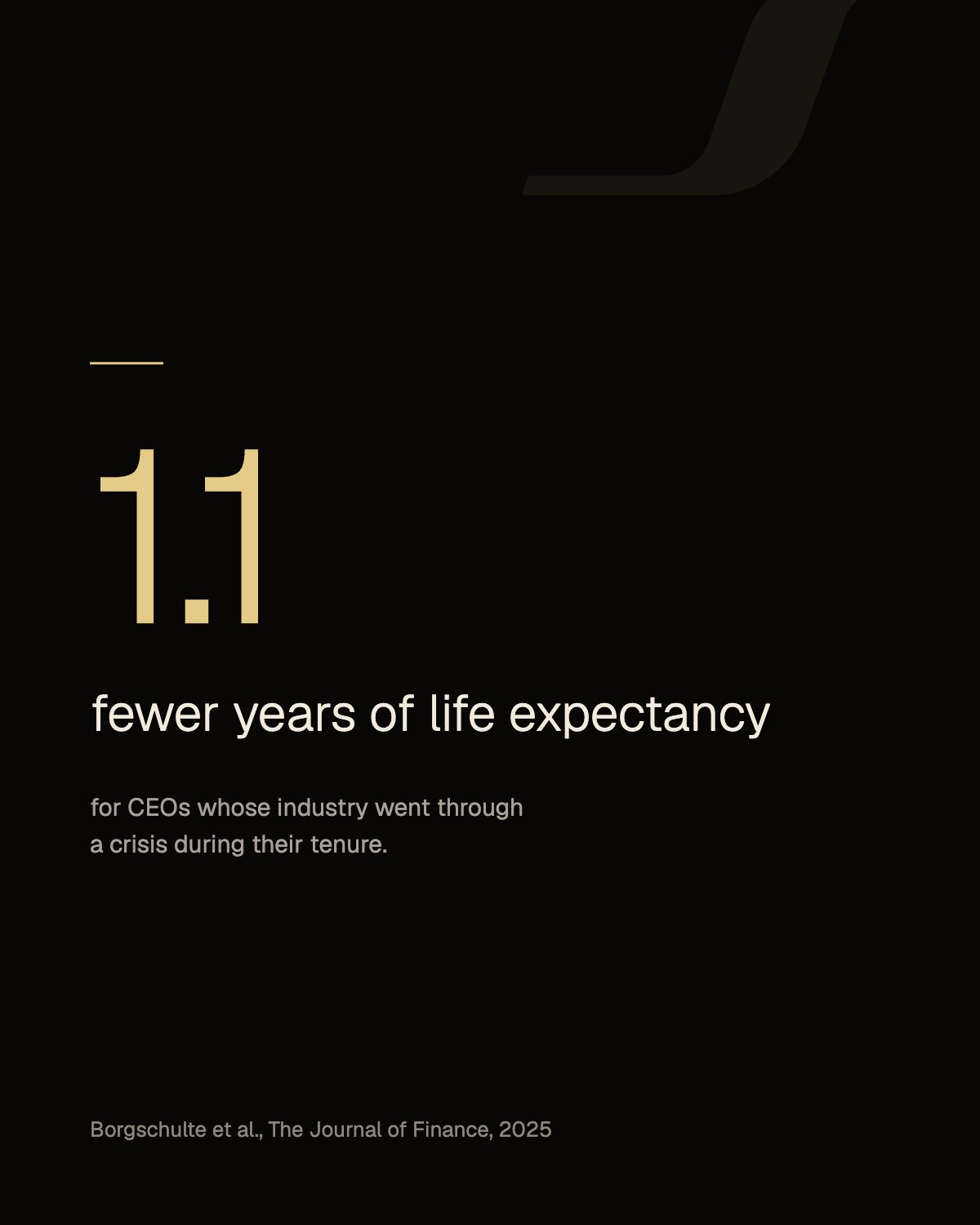
Control: the variable that decides how leading ages you
In 1958, an experiment with monkeys convinced half the world that being in charge makes you ill. Later science showed something else. Dr Emmanuel González explains what we know today about executive stress, the heart and years of life.
Dr Emmanuel González · Executive health 1 OCT 2026 · 7 MIN
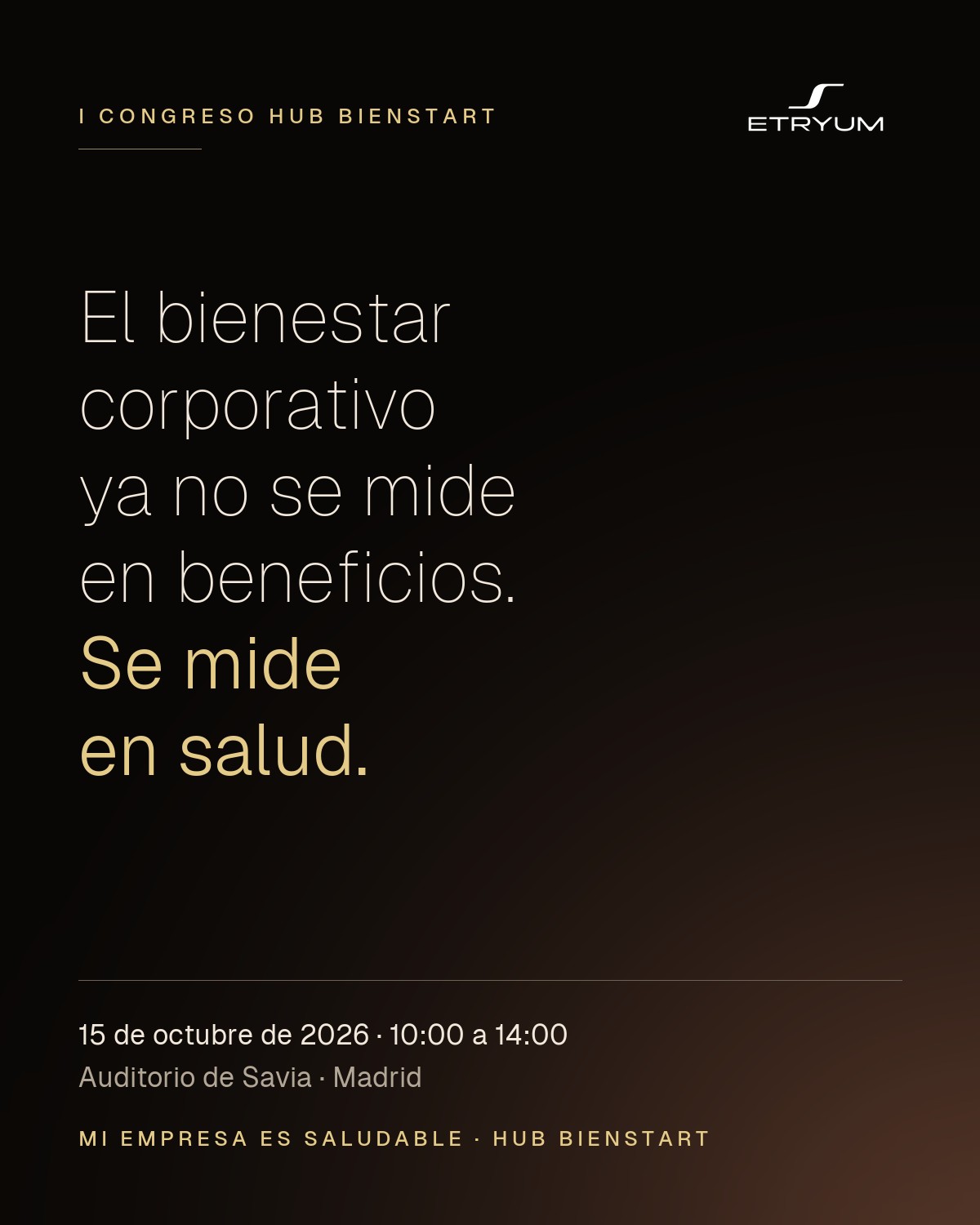
From reactive to preventive medicine: why we will be at HUB BienStart
On 15 October, ETRYUM takes part in the first HUB BienStart congress by Mi Empresa es Saludable in Madrid. Héctor Blasco, CEO of ETRYUM, explains what we bring to the panel and why a team’s health cannot wait for sick leave.
Héctor Blasco · Executive health 30 SEP 2026 · 4 MIN