

Good ideas look very much alike. What sets them apart is who carries them out, and how.
Healthcare has no shortage of good ideas. Prevent rather than cure, look at the whole person, coordinate the specialists. Hardly anyone disagrees. The difference lies in what happens on a Tuesday at eleven in the morning, when the diary is tight, someone on the team is missing and a patient needs more time than planned.
That is where an idea holds or falls apart. And there, almost always, what decides it is the team.
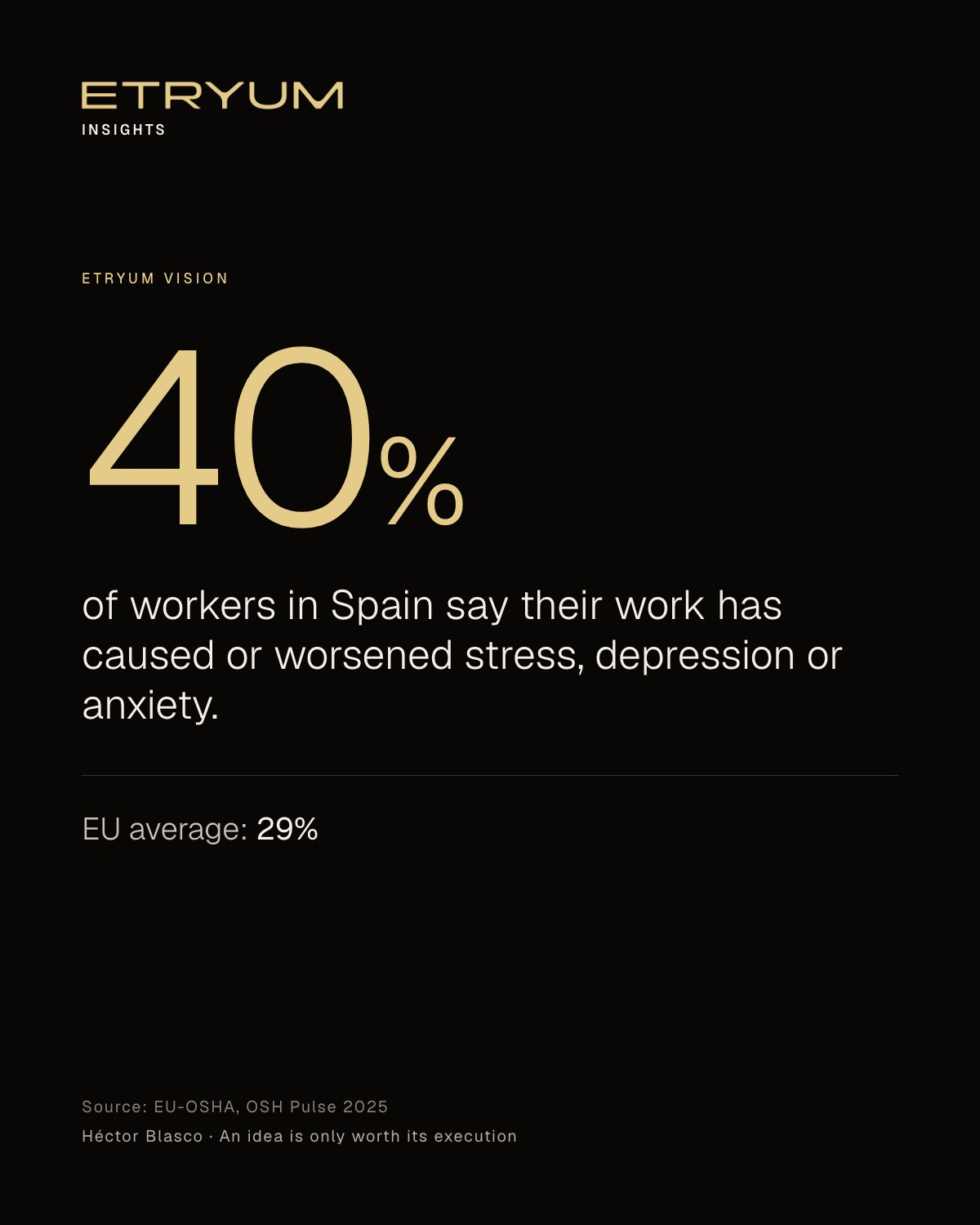
In short: in a clinic, the quality of care depends on the people who provide it. That is why looking after the team’s health (real time for each patient, coordination, training and predictable hours) is not an internal matter but a condition of good medicine. In Spain, 40% of workers say their work has caused or worsened stress, depression or anxiety, against an EU average of 29%.
A clinic is also a company
I come from management. I have worked for multinationals, restructured companies and learned to read numbers, processes and deadlines. All of that matters in a clinic: an organisation that is not sustainable cannot look after anyone for long.
But there is one difference from almost any other sector. In healthcare, the service is not delivered by a machine or a process. It is delivered by a person who listens, examines, explains and decides. If that person is exhausted, rushed or has no margin, quality drops even if the protocol is perfect.
That is why, for me, managing people is not a department. It is part of the quality of care.
Why should a clinic look after its own team’s health?
ETRYUM is a prevention centre. We talk to our patients about rest, recovery, sustained stress and habits. It would be inconsistent to defend all of that in the consultation room and organise our own team’s work in the opposite way. We cannot ask outside for what we do not do inside.
One figure helps explain why it matters. According to the OSH Pulse 2025 survey by the European Agency for Safety and Health at Work (EU-OSHA), 40% of workers in Spain say their work has caused or worsened stress, depression or anxiety. The European average is 29%.
No company is immune to that figure, and neither is a clinic. The difference lies in treating it as each person’s problem or as a responsibility of whoever organises the work. We choose the second.
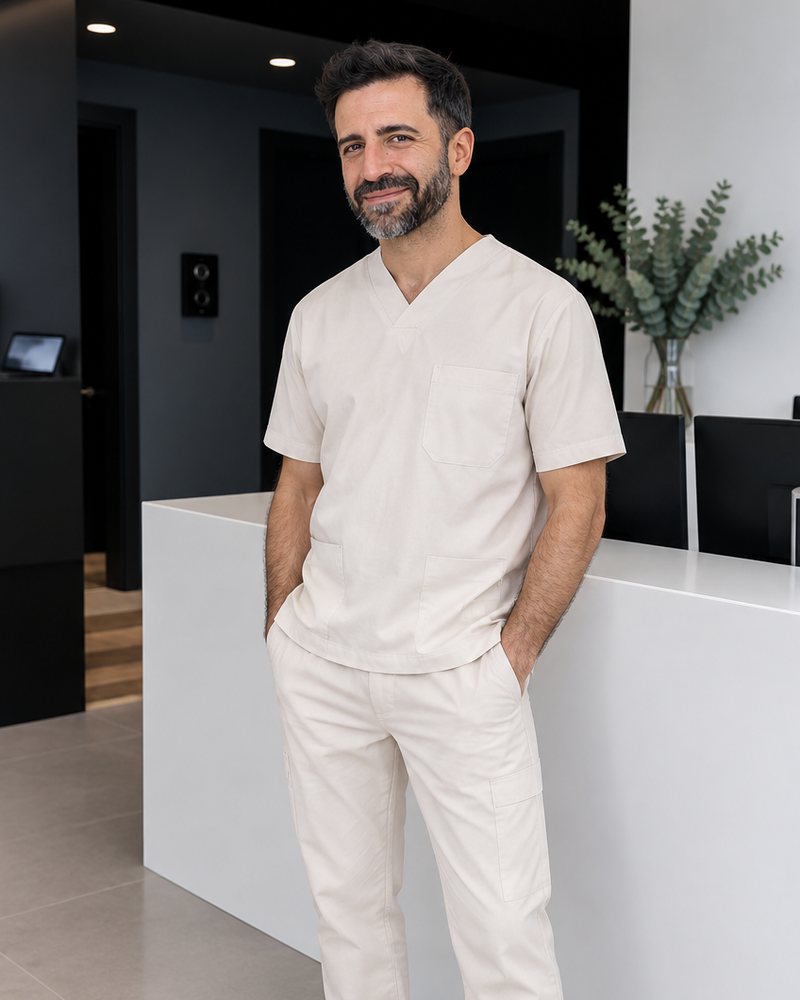
What happens in the body when demand never switches off is explained by Cristóbal Becerril in What is psychoneuroimmunology, and how does chronic stress affect your body?.
How do you look after a team day to day?
Looking after a team is not proven with a slogan, but with decisions you can feel in everyday work. These are some of ours:
- Real time for each patient. The first medical assessment lasts about 60 minutes. A diary that respects that time protects the patient and the professional too.
- One team. Every discipline is coordinated around the same person. Sharing the case with other professionals means nobody is left alone with each decision.
- Training as part of the job. Learning is part of the working day, not something left for free time.
- Predictable hours. Knowing when you work and when you rest is the basis of any recovery.
- Clinical judgement decides. Decisions about each patient are taken by healthcare professionals, independently. Management is there to support that judgement, not to replace it.
Executing means keeping your promises
When someone writes to us, we make them concrete promises: that we will reply within 24 hours, that they will have time to explain what is happening to them, and that they will leave knowing what has been found and what the next steps are.
Every one of those promises depends on the team that keeps them being well. That is why the team’s health is not an internal matter. It is the condition for everything else to work.
The same goes for the companies that ask us for help with the health of their executives and teams. What we propose to them is what we try to practise inside.
To finish
Building a clinic is, to a large extent, building a team. Walls, technology and protocols can be bought or copied. The way a team works together cannot.
My commitment is simple: that every promise we make, to patients and to the people who work with us, becomes a fact.
If you lead a company and want to look after your team’s health, in Leading under load we explain how we work with executives and organisations.
Sources
- European Agency for Safety and Health at Work (EU-OSHA). OSH Pulse 2025: Spain factsheet. 2025.
This article is for general information and does not replace an individual medical assessment.
More ETRYUM Insights

What hospitality can teach a clinic
Sofía Díaz Imbroda, Investor Relations & Operations at ETRYUM, has spent more than twenty years in hospitality, luxury retail and wellness. She explains what that experience can bring to a clinic, and where its limit lies, medical judgement.

Sofía Díaz Imbroda · ETRYUM Vision 12 OCT 2026 · 3 MIN
A good team is not enough: you need a system
The best professionals, working separately, do not guarantee good care. Dr Mario Parra, co-founder and Clinical Director of ETRYUM, explains the idea of a system on which the clinic has been built.
Dr Mario Parra Rawel · ETRYUM Vision 9 OCT 2026 · 3 MIN
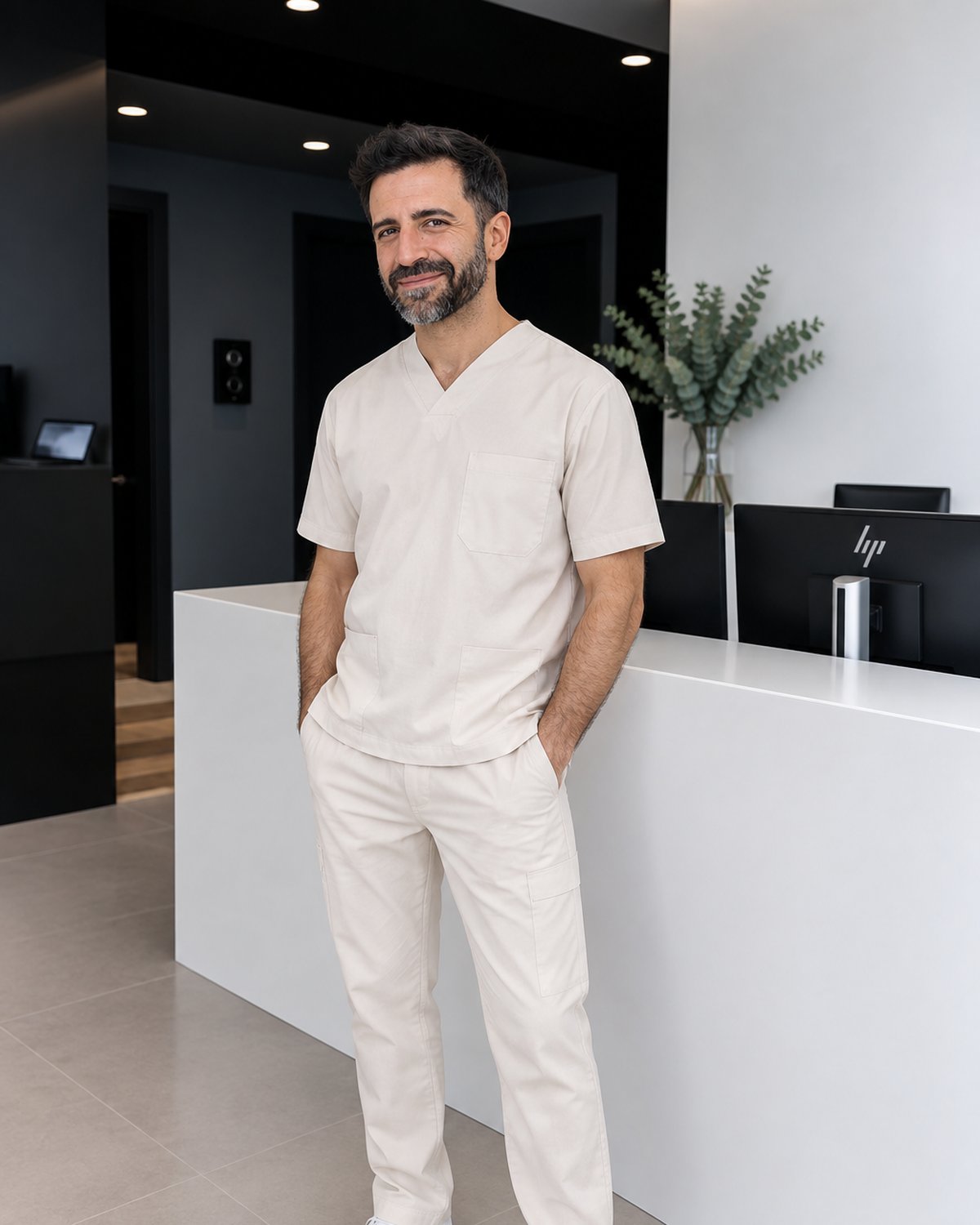
What is psychoneuroimmunology, and how does chronic stress affect your body?
Stress is not just a feeling. It is a biological response involving the brain, hormones and the immune system. Cristóbal Becerril, ETRYUM’s clinical PNI specialist, explains what happens when it becomes chronic and how to help the body find its rhythm again.
Cristóbal Becerril · Psychoneuroimmunology 5 OCT 2026 · 9 MIN