



“It’s stress.”
You have been sleeping badly for weeks, you wake at three in the morning with your mind racing, your stomach complains, you catch every cold going and your energy runs out by mid-afternoon. And when you finally mention it, that is the answer you get: it’s stress.
It may well be true. But put like that, it seems to explain everything and nothing at the same time. How can something that happens “in your head”, a way of thinking or the way we deal with everyday problems, show up in your sleep, your digestion or your immune defences? That is exactly the question psychoneuroimmunology studies.
We are publishing this article in the week of World Mental Health Day, held every year on 10 October. That is no coincidence: psychoneuroimmunology reminds us that mental and physical health are part of the same conversation.
In short: psychoneuroimmunology (PNI) studies how the brain, hormones and the immune system communicate. Short-term stress is useful; the problem is chronic stress, which throws the cortisol rhythm off balance and shows up in sleep, digestion, immunity and hormones. What helps most is not a supplement, but regular sleep, eating enough, moving without punishing yourself, breathing and looking after your relationships.
What is psychoneuroimmunology?
Psychoneuroimmunology, or PNI, studies how the nervous system, the endocrine system (hormones) and the immune system communicate with each other, and how that conversation is shaped by what we live through, feel and do every day.
It is not an alternative to medicine, nor an isolated specialty. It is a way of looking at the body as what it is: a network, a whole in constant communication. The brain receives information from the gut, the immune system, light, the body’s energy status and emotions, and responds with nerve and hormonal signals that reach every tissue. Those tissues, in turn, report back to the brain.
You could say that our body talks to our brain and the brain responds, but our brain also talks to our body, and the body reacts too.
The useful question is not only whether a hormone is high or low, but what the body is trying to solve and what it costs to keep that response going over time.
Stress is not the enemy
The stress response is one of the most valuable and effective tools we have. Faced with a demand (an exam, an infection, an intense training session, a threat) the body switches on in two stages:
- Within seconds, the sympathetic nervous system releases adrenaline and noradrenaline: the heart speeds up, the airways open, more blood reaches the muscles and attention sharpens.
- Within minutes, the hypothalamic-pituitary-adrenal axis (the HPA axis) releases cortisol, which mobilises energy, supports blood pressure and, something that is often forgotten, acts as a brake on inflammation.
Cortisol is not a “bad” hormone. It follows a daily rhythm: it rises before we wake to help us get going and falls towards the evening so we can rest; as it falls, melatonin and growth hormone can rise. When the demand passes, the parasympathetic system takes over and the body returns to a state of repair, digestion and recovery.
A brief, proportionate activation is adaptive. The problem is not switching on, but being unable to switch off.
What happens in the body when stress becomes chronic?
If the demand is intense, repeated or leaves no room for recovery, the body pays a price. Science calls it allostatic load: the accumulated cost of keeping the adaptation and alarm systems switched on for too long.
That cost does not show up in the same way in everyone. Some people keep cortisol high; others lose its daily rhythm; in others, tissues stop responding well to cortisol even though levels look normal. There is no specific set of symptoms for chronic stress, because not everyone responds in the same way. But there are areas where we can see this kind of stress taking its toll:
Sleep
Trouble falling asleep, waking in the night, sleep that does not refresh. And too little sleep, in turn, disrupts the cortisol rhythm: a loop that feeds itself. Sleep is our time for repair and for calming inflammation; if we do not look after our rest, we cannot expect the body to work as it should.
Digestion
Sustained stress slows digestion, changes bowel transit and can affect the gut barrier and the microbiota. The gut-brain axis works both ways: poorly managed stress can end up causing digestive problems that, until recently, were hard to link to it.
Immunity and inflammation
Decades of research link chronic stress with a less effective immune response and more low-grade inflammation. A sustained excess of cortisol (hypercortisolaemia) dampens the immune system, giving opportunistic pathogens free rein.
Hormones and energy
Hormonal axes share resources. Under a sustained threat, the body prioritises mobilising itself and postpones functions such as reproduction: cycle changes, lower desire or more tiredness can appear.
Health is not defined by a single hormone value. It shows in the flexibility to switch a response on when it is needed and off once it has done its job.
Does “adrenal fatigue” exist?
It is a term you hear a lot in integrative medicine, and it is worth being honest about it.
It does not mean the glands are exhausted
The adrenal glands do not “run out”. It is not a recognised medical diagnosis, and it must not be confused with adrenal insufficiency, a real disease that needs specific endocrine tests and can become life-threatening within hours.
It is not an automatic explanation
Before blaming tiredness on stress, common and treatable causes need to be ruled out: anaemia, thyroid problems, sleep apnoea, depression, side effects of medication, eating less than you burn, or infections.
A single cortisol result does not tell the whole story
Cortisol varies with the time of day, sleep, the menstrual cycle and physical activity. A single measurement is just a snapshot. What matters is the pattern, in the context of the person.
What is real is dysregulation of the stress axis: a system that has lost its rhythm or its ability to respond. Naming it precisely leads to better questions. Turning it into a label for any kind of tiredness can delay important diagnoses.
How we see it in PNI: when the cortisol curve flattens
When stress settles into our lives chronically and cortisol stays high all day, we can end up in two scenarios with the same result.
Cortisol resistance. Tissues that respond to cortisol can start to become resistant to it, so more and more is needed for the same effect, rather like what happens with insulin resistance.
Less cortisol than we need. The stress axis can end up “tiring” and producing less cortisol than we need (hypocortisolism). It is not that the glands are exhausted, as we saw above: it is the system itself that turns its response down.
Both processes lead to the same result: the swings cortisol should make over the day do not happen, and the curve flattens. It does not rise in the morning, which makes getting out of bed a huge struggle and leaves us exhausted once we are up. And it does not fall at night, so melatonin and growth hormone do not reach the levels we need for good-quality rest.
How we work on it at ETRYUM
-
01
Rebuild the story
When it started, what changed, how you sleep, when you eat, how much light you get, how you train, what worries you. The pattern is usually in the timeline.
-
02
Rule out what needs ruling out
In coordination with the medical team, because PNI widens the context but does not replace the differential diagnosis.
-
03
Measure with judgement
Only what can change a decision, interpreted according to the time of day, the phase of the cycle and the situation. Heart rate variability, for example, helps track recovery, but it is not a diagnosis on its own.
-
04
Work on the levers
Sleep and light, enough food, well-dosed movement, breathing, relationships and, when needed, psychological support. A few things, well chosen.
-
05
Review
How you sleep, how you recover, how you feel. If something is not working, we find out why and adjust.
What really helps to regulate stress?
There is no supplement that “switches off” stress. What has the strongest scientific support is less eye-catching and more effective:
- Regular sleep. Stable sleep times and natural light in the morning help reset the rhythm of cortisol and melatonin.
- Eating enough. A sustained energy deficit is, for the body, another form of stress.
- Moving, without punishing yourself. Regular exercise improves stress regulation; too much without recovery makes it worse.
- Breathing and mindfulness. Simple techniques with growing evidence on the stress response and some inflammatory markers. Time in nature, meditation and yoga are also gathering more and more evidence for their effect on health.
- Relationships. Social isolation is linked with more inflammation and poorer health; social support protects in measurable ways.
When to seek help without waiting
If emotional distress, anxiety or low mood are getting in the way of your daily life, ask for professional help: looking after your mental health is medicine too. If at any point you have thoughts of harming yourself, in Spain you can call 024, free and available 24 hours a day, or 112 in an emergency.
And see a doctor if you have unexplained weight loss, persistent dizziness or very low blood pressure, periods that have stopped for a long time, or headaches with changes in your vision.
Two examples to make it clearer
Real case · name changed
Elena, 38
She manages projects, does high-intensity interval training six days a week, often on an empty stomach, and eats in a hurry. She wakes every night in the early hours, has heavy digestion, catches colds often and her menstrual cycle has become irregular. Her basic blood tests are normal.
Once medical causes are ruled out, her story reveals a pattern: too little energy available for what she demands of herself, training without recovery, screens until late and no real break in the day. Her body is not “broken”. It is prioritising survival.
The plan does not start with adding supplements: eating enough around training, lowering the intensity and gaining rest, morning light, a routine to switch off at night and a few minutes of breathing a day. After a few weeks, we review her sleep, digestion, cycle and energy.
It was never about removing stress from her life, but about giving her body back its ability to recover.
Real case · name changed
Rafa, 40
He is an associate professor at a university and is preparing for the competitive exam to become a full professor. For almost six months he has done nothing but work, study and prepare projects, with hardly any time left for exercise or switching off. He admits that every night he gets into bed with his laptop and keeps working until he drops.
For some time now he has felt tired all day, he cannot fall asleep (some nights it takes him hours), he feels much more irritable and his libido has dropped sharply. His latest blood test shows, among other things, that his free testosterone has fallen compared with previous results.
Chronic stress has affected his reproductive axis (the gonadal axis) and lowered his testosterone. His body is in survival mode and has put reproductive functions on hold.
In his case we did use some supplements that helped him manage stress and sleep better, but the main intervention was on his habits: physical activity, sleep hygiene, meal times and the type of meals.
If you lead a team or a company
Allostatic load does not care about job titles, but positions of responsibility tend to bring many of its ingredients together: long days, constant decisions, travel, the phone until bedtime and very little real recovery. Elena and Rafa show it well: their basic tests alarmed no one, yet their bodies had been in survival mode for months.
The good news is that the pattern can be spotted early: how you sleep, how you recover, how you digest and how you feel by mid-afternoon. In Leading under load we explain how we work with executives and organisations.
To finish
Stress is part of life, and we cannot and should not eliminate it. What we can do is look after the body’s ability to respond and, above all, to come back.
Understand the pattern. Rule out what needs ruling out. Act on a few well-chosen things. And give the body time to find its rhythm again.
That is the view of psychoneuroimmunology: not separating the mind from the body, because they have never been apart. And it is a good way to mark World Mental Health Day: by looking after both at once.
Sources
- McEwen BS. Physiology and neurobiology of stress and adaptation: central role of the brain. Physiol Rev. 2007;87(3):873–904.
- Russell G, Lightman S. The human stress response. Nat Rev Endocrinol. 2019;15(9):525–534.
- Herman JP, et al. Regulation of the hypothalamic-pituitary-adrenocortical stress response. Compr Physiol. 2016;6(2):603–621.
- Dhabhar FS. Effects of stress on immune function: the good, the bad, and the beautiful. Immunol Res. 2014;58(2–3):193–210.
- Segerstrom SC, Miller GE. Psychological stress and the human immune system: a meta-analytic study of 30 years of inquiry. Psychol Bull. 2004;130(4):601–630.
- Silverman MN, Sternberg EM. Glucocorticoid regulation of inflammation and its functional correlates. Ann N Y Acad Sci. 2012;1261:55–63.
- Fries E, et al. A new view on hypocortisolism. Psychoneuroendocrinology. 2005;30(10):1010–1016.
- Cadegiani FA, Kater CE. Adrenal fatigue does not exist: a systematic review. BMC Endocr Disord. 2016;16(1):48.
- Bornstein SR, et al. Diagnosis and treatment of primary adrenal insufficiency: an Endocrine Society clinical practice guideline. J Clin Endocrinol Metab. 2016;101(2):364–389.
- Besedovsky L, Lange T, Haack M. The sleep-immune crosstalk in health and disease. Physiol Rev. 2019;99(3):1325–1380.
- Gordon CM, et al. Functional hypothalamic amenorrhea: an Endocrine Society clinical practice guideline. J Clin Endocrinol Metab. 2017;102(5):1413–1439.
- Tracey KJ. The inflammatory reflex. Nature. 2002;420(6917):853–859.
- Black DS, Slavich GM. Mindfulness meditation and the immune system: a systematic review of randomized controlled trials. Ann N Y Acad Sci. 2016;1373(1):13–24.
- Holt-Lunstad J, Smith TB, Layton JB. Social relationships and mortality risk: a meta-analytic review. PLoS Med. 2010;7(7):e1000316.
This article is for general information and does not replace an individual medical assessment.
More ETRYUM Insights
Control: the variable that decides how leading ages you
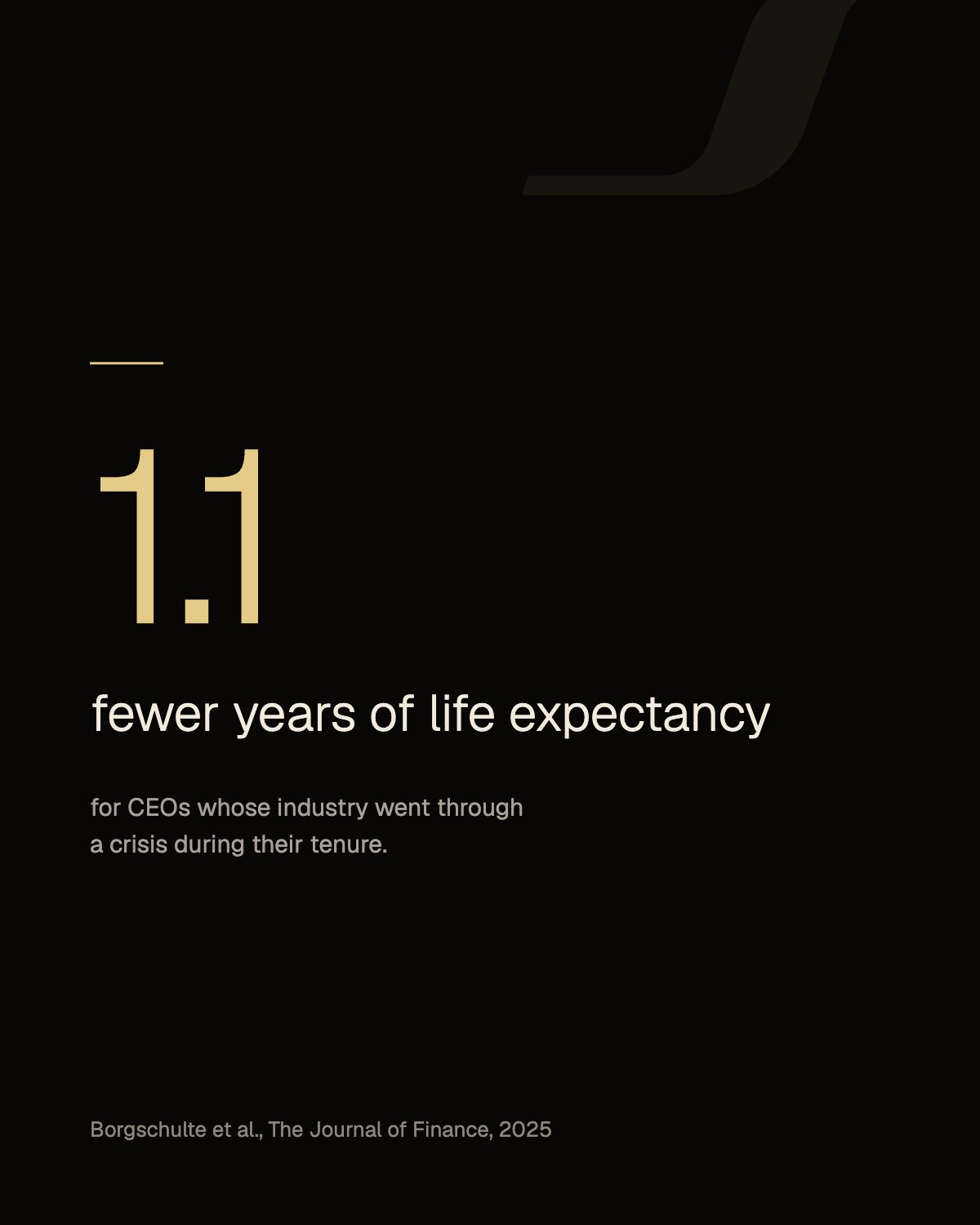
In 1958, an experiment with monkeys convinced half the world that being in charge makes you ill. Later science showed something else. Dr Emmanuel González explains what we know today about executive stress, the heart and years of life.

Dr Emmanuel González · Executive health 1 OCT 2026 · 7 MIN

From reactive to preventive medicine: why we will be at HUB BienStart
On 15 October, ETRYUM takes part in the first HUB BienStart congress by Mi Empresa es Saludable in Madrid. Héctor Blasco, CEO of ETRYUM, explains what we bring to the panel and why a team’s health cannot wait for sick leave.
Héctor Blasco · Executive health 30 SEP 2026 · 4 MIN